
Best Business & Jobs Apps for Mac (2026)
A Mac is a quietly capable base for getting paid, whether you drive gigs, run payroll, or sell online. We spent weeks treating ours like a work command center to see which apps hold up on a big screen versus the ones that clearly want your phone. Below are the picks we actually kept open, with notes on free versus paid and what each one feels like day to day. For more, browse the wider Business and Jobs hub or our full roundup of the best Mac apps.
1. Shopify
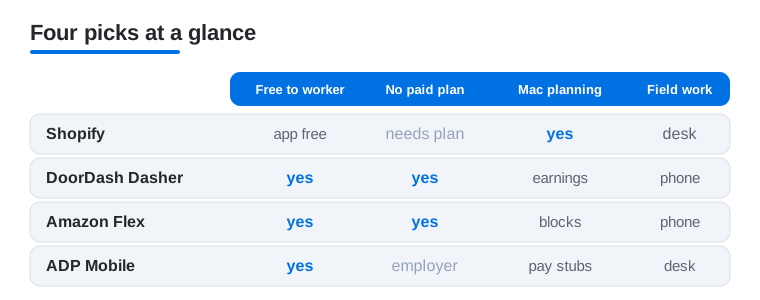
If you sell anything online, Shopify on a Mac is where the work gets comfortable. We loved having the orders dashboard, product photos, and analytics spread across a real screen instead of squinting at a phone. Editing listings and replying to customers is far faster with a keyboard. The app is free, but you need a paid Shopify plan. In our testing, clearing an order backlog went twice as quick.
2. DoorDash
The customer-facing DoorDash app is not really built for a Mac, but it earns a spot for planning. We used it on the big screen to scout which restaurants and zones were busy before a shift, then handled the driving on a phone. Free to install, with no subscription unless you add DashPass. Think of it as your pre-shift research window rather than a tool you run while moving.
3. DoorDash Dasher
The Dasher app is the driver side of the equation, and on a Mac it shines for the parts that happen at the kitchen table. We reviewed weekly earnings, checked the Dash schedule, and read pay breakdowns far more comfortably than on a cramped phone. It is completely free for drivers. Keep it open while you do your end-of-week numbers, then switch to your phone when you head out.
4. Amazon Flex
Amazon Flex is how independent drivers grab delivery blocks, and a Mac makes the planning side a lot calmer. We liked spreading the block calendar and pay details across a full screen while deciding which offers were worth the drive. The app costs nothing to use. Just remember the live delivery work is phone-only, so treat the Mac as the scheduling desk where you compare blocks first.
5. ADP Mobile
ADP Mobile is the app millions of employees open on payday, and the Mac version is a relief for anything fiddly. We pulled up pay stubs, checked tax documents, and reviewed PTO balances on a screen big enough to read the fine print. It is free if your employer runs payroll through ADP. The bigger canvas makes scanning a year of stubs at tax time far less painful.
6. Paylocity
Paylocity blends payroll with a social workplace feed, and that mix lands better on a Mac. We checked paychecks, requested time off, and skimmed company announcements without the constant scrolling a phone forces. The HR self-service tools are clearer with room to breathe. It is free for employees whose company subscribes. We found the benefits section especially worth opening here, since reading enrollment details on a laptop beats a phone.
7. UKG Pro
UKG Pro handles scheduling, timekeeping, and pay for a lot of shift-based workplaces, and a Mac suits the planning bits well. We swapped shifts, reviewed timecards, and read pay statements with everything laid out clearly rather than buried in phone menus. It is free if your employer uses UKG. For anyone juggling a rotating schedule, seeing the full week at once on a larger display made trading shifts less stressful.
8. Blink
Blink is a frontline employee app for people who do not sit at a desk, and ironically it is handy on a Mac for managers and remote days. We used it to read company updates, message teammates, and access shift info in one tidy feed. The core app is free, with paid tiers for bigger organizations. In our testing it felt like a friendly internal social network.
Business and jobs apps for Mac: the desktop workhorse
The Mac is where the real keyboard work happens. Writing, spreadsheets, accounting, video calls, and long stretches of typing are simply more comfortable on a wide screen with a proper keyboard. The apps on this page lean toward gig and payroll work, but the wider story for a Mac is broader: it is the machine you use when a task involves reading, comparing, drafting, or talking to people for more than a minute. This guide walks through how to think about that, and which well known business tools have genuine Mac apps versus the ones you simply open in a browser tab.
Native Mac apps versus websites: know the difference
Not everything you use for work needs to be installed. On a Mac you have two honest options, and it helps to be clear about which is which.
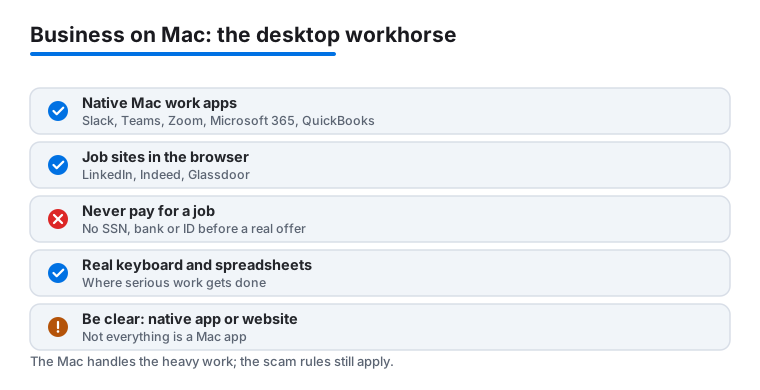
- Native Mac apps are downloaded programs that live in your Applications folder and run on their own. They tend to handle notifications, files, and background sync better than a browser tab. The following all ship real native Mac apps in 2026: Slack, Microsoft Teams, Zoom, the Microsoft 365 suite (Word, Excel, PowerPoint, and Outlook), and Notion. Each of these has a Mac build you can install directly, not just a phone app forced onto a laptop.
- Websites are tools you simply open in Safari, Chrome, or another browser. Plenty of serious work happens this way, and there is nothing second class about it. The big job search services fall here: LinkedIn, Indeed, and Glassdoor are most often used in the browser on a Mac. Accounting belongs here too: QuickBooks Online runs in the browser on a Mac, because Intuit discontinued QuickBooks Desktop for Mac and there is no current native Mac client to install. You do not need to hunt for a desktop installer for them, and you should be wary of any that claims to be an official Mac app.
The reason this matters: a phone-only app that happens to run on an Apple silicon Mac is not the same as a tool built for the desk. For job hunting in particular, the browser is the honest, full-featured home on a Mac.
Job search on a Mac, done in the browser
Looking for work is a reading and writing job, which makes the Mac a natural fit. LinkedIn, Indeed, and Glassdoor all run in any browser, and the desktop view gives you the full picture: a wider results list, side by side comparison of postings, and a real keyboard for cover letters and messages.
- LinkedIn in the browser is where you keep a profile current, search openings, and message recruiters. The larger layout makes editing your profile and reading a company page far easier than tapping through a phone.
- Indeed shines for volume. On a Mac you can scan many listings quickly, save the ones worth a second look, and apply with a saved resume without the cramped feeling of a small screen.
- Glassdoor is the one you open to read company reviews, salary ranges, and interview notes before you commit time to an application. All of that is plain reading, which the Mac handles comfortably.
A safety note on job scams
Job hunting attracts scammers, and a calm checklist protects you. Keep these rules in mind no matter which site you use.
- Never pay for a job. A legitimate employer does not ask you to pay for training, equipment, a background check, or a starter kit. If money has to flow from you to them before you are hired, walk away.
- Be wary of chat-only recruiters. A real hiring process eventually involves a phone call, a video interview, or a verifiable company email. If someone only ever contacts you through a messaging app and rushes you, treat it as a warning sign.
- Protect your Social Security number, bank details, and ID. You should not share these during early conversations. They come into play after a genuine offer, through the employer official payroll or HR system, not over chat or a random web form.
Business tools with real Mac apps
Once you are working, the Mac earns its keep with installed apps that run all day. These are the desktop workhorses worth knowing.
- Slack and Microsoft Teams are the two big team messaging apps, and both have native Mac versions. On a desktop they handle multiple channels, file sharing, and notifications more gracefully than a phone, and you can keep them running in the background while you work.
- Zoom has a dedicated Mac app for video calls. The desktop build is the one you want for screen sharing, managing a gallery of participants, and using a real microphone and camera setup.
- Microsoft 365 brings Word, Excel, PowerPoint, and Outlook to the Mac as full native apps. This is the heart of keyboard work: writing documents, building spreadsheets, and managing email all happen here with the depth a phone cannot match.
- Notion offers a native Mac app for notes, documents, and project tracking. It suits the planning side of running a small business or a personal job search, with everything in one organized place.
One common tool that is not on this list is accounting. QuickBooks no longer ships a native Mac client: Intuit discontinued QuickBooks Desktop for Mac, so on a Mac you use QuickBooks Online in the browser. Reconciling accounts, sending invoices, and reading financial reports still benefit from a large screen, but they happen in a browser tab rather than an installed app.
The gig and payroll apps reviewed above (Shopify, the DoorDash apps, Amazon Flex, ADP Mobile, Paylocity, UKG Pro, and Blink) are mostly phone first apps that run on Apple silicon Macs for the desk parts of the work: reviewing earnings, comparing delivery blocks, reading pay stubs, and editing listings. Treat the Mac as the planning and review desk, then hand the live, on-the-go tasks back to your phone where GPS and instant alerts belong.
How to decide what belongs on your Mac
A few simple questions sort most of this out.
- Is it mostly reading or typing? If yes, the Mac wins. A keyboard and a wide display pay off fast for documents, spreadsheets, messages, and job applications.
- Does it need a real Mac app, or is a browser fine? Install the ones that run all day and manage notifications, like Slack, Teams, Zoom, Microsoft 365, and Notion. Use the browser for job sites, QuickBooks Online, and anything you only visit occasionally.
- Is it a live, on-the-move task? Driving, navigation, and instant alerts stay on the phone. The Mac is the desk, not the road.
Frequently asked questions
Do these gig driver apps actually work on a Mac?
Partly. Apps like DoorDash, Dasher, and Amazon Flex run on Apple silicon Macs for planning, scheduling, and reviewing earnings, which is where the big screen helps most. The live driving and navigation still need your phone, since they rely on GPS and on-the-go alerts. We treat the Mac as the desk where you prep and crunch numbers.
Are any of these business apps free?
Most are free to download and use. The catch is that payroll apps like ADP Mobile, Paylocity, and UKG Pro only work if your employer subscribes, and Shopify needs a paid store plan behind it. The driver apps cost nothing for workers. So your real cost depends on the company or platform you are tied to, not the app itself.
Why use a Mac for this instead of just my phone?
Comfort and clarity. Reading pay stubs, comparing delivery blocks, editing product listings, or sorting tax documents is simply easier on a large display with a keyboard. We found tasks that involve a lot of reading or typing go faster on a Mac, while quick, on-the-move actions still belong on a phone. Many people use both side by side.
What other Apple devices pair well with these apps?
An iPhone is the natural companion, since live gig work and notifications live there. If you want something in between, the same tools on an iPad give you a touch screen with more room. See our guides to the best business apps for iPhone and the best business apps for iPad to round out your setup.
Which job search and business tools have real Mac apps versus just a website?
Job search services like LinkedIn, Indeed, and Glassdoor are normally used in a web browser on a Mac, and that browser view is full featured, so you do not need a separate installer. QuickBooks sits in the same browser camp now: Intuit discontinued QuickBooks Desktop for Mac, so you run QuickBooks Online in a browser rather than installing a native client. Business tools with genuine native Mac apps include Slack, Microsoft Teams, Zoom, the Microsoft 365 suite (Word, Excel, PowerPoint, Outlook), and Notion. If something claims to be an official Mac app for a job board or for QuickBooks, be cautious, since those tools live in the browser.
How do I avoid job scams while applying online?
Follow three rules. First, never pay for a job: real employers do not charge you for training, equipment, or a background check. Second, be wary of recruiters who only ever talk through a chat app and rush you, since a genuine process involves a call, a video interview, or a verifiable company email. Third, protect your Social Security number, bank details, and ID, and share them only after a real offer through the employer official payroll or HR system, never over chat or a random form.