
Google Drive for Teams on iPad: a Hands-On Guide
Our team runs on shared files, and for the past few months we leaned on Google Drive on an iPad Pro to see how it handles real collaboration away from a desk. A quick note before we start, because it trips people up: the Google Drive app you install from Apple's App Store is the iPhone and iPad app. There is no separate Google Drive app in the Mac App Store. On a Mac you either use the website or install Google Drive for desktop, which Google hands out from its own download page, not the App Store. So this guide is built around the iPad app, with the Mac side covered honestly where it matters. The short version: Drive is genuinely good for keeping a group in sync, with a few rough edges worth knowing before you move your whole workflow onto it.
Getting Drive running on your iPad
Setup is quick. On the iPad, grab Google Drive from the App Store, sign in with your work or personal Google account, and you are in within a minute. If your team uses Google Workspace, ask whoever manages the account to add you first, otherwise you will only see your own files and none of the team's shared drives. The account you sign in with decides everything you can reach, so if a folder is missing it is almost always a permissions issue rather than a bug.
The detail that made the biggest difference for us was turning Drive on inside the iPad Files app. Open Files, tap the three-dot menu in the sidebar, choose the option to edit or manage locations, and switch Drive on. Once it is enabled, your Drive folders show up alongside iCloud in the sidebar, so you can open a teammate's document straight from any app without bouncing into the Drive app first. You can also save attachments and exports directly into a shared folder from the share sheet. It is a small thing that quietly removes a lot of friction when you are moving fast.
If you also work on a Mac, set expectations correctly. Drive for desktop mounts your shared drives in Finder like an external disk, and on macOS Ventura 13 and later it appears under Locations in the Finder sidebar. Older macOS versions lose support, so keep that machine reasonably current. The web version at drive.google.com is fine for quick checks, but for day to day team work the desktop app is steadier. None of this comes from the App Store, which is the part people get wrong.
The features that actually matter for a team
Plenty of cloud apps store files. What earns Drive its place on a team is how the pieces fit together. After months of shared projects, these are the features we reached for constantly:
- Shared drives: Files live with the team, not one person, so nobody loses access when a colleague leaves or changes their login. This is a Google Workspace feature, not part of the free consumer account, so a free Gmail user will not see it. If your team needs it, you need a paid Workspace plan.
- Granular sharing: You can give a client view-only access to one folder while your editors get full edit rights on another. Setting an expiry date on a share link is handy for short outside collaborations, and you can stop people from downloading or copying view-only files.
- Real-time co-editing: Open a Doc or Sheet from Drive and you see colleagues' cursors move live. We had three people in one sheet on a Friday afternoon with no conflicts and no lost edits.
- Version history: Every file keeps a timeline, so when someone overwrites the wrong cell you can roll back in seconds. For Google formats this history is detailed; for uploaded files like PDFs it keeps prior versions you can restore.
- Search that reads inside files: Drive indexes text inside PDFs and even scanned images, which saved us more than once when a file had a vague name.
On the iPad, the built-in scanner is underrated. Tap the plus button, choose Scan, and you can photograph a paper page, crop it, and drop it straight into a shared folder as a PDF. For a team that still deals with the odd printed form or receipt, that alone earns the app a spot.
Working offline and on the move
The whole promise here is collaborating on the go, so offline behavior matters. In the Drive app you can mark a file or folder as available offline using the three-dot menu, and it then syncs to the iPad so you can keep reading and editing on a plane or a patchy train. When you reconnect, your changes upload quietly in the background. We tested this on a long trip with spotty signal and it held up, but you do need to remember to mark things offline before you lose your connection, because Drive will not guess what you might want and it will not bulk-download a whole drive for you.
One honest caveat that cost us a week of confusion: Google Docs, Sheets, and Slides files behave differently from regular files. Those Google formats need their own apps installed to edit offline, and you turn offline access on inside each of those apps, not in Drive. So if you want to edit a Doc on a flight, install the Google Docs app, open the document, and set it for offline use there first. Plain files like PDFs and Word documents are simpler and follow the offline toggle in Drive itself. If your team mixes Microsoft Office files with Google formats, walk everyone through this once so nobody is staring at a greyed-out document mid-flight.
Multitasking and Pencil work on the iPad
iPad work in 2026 looks different from a couple of years ago. iPadOS 26 reworked multitasking, and the old fixed Split View has been folded into the new windowing system, where you resize and place app windows more freely, with Stage Manager for grouping windows into spaces. In practice this is good news for Drive. You can sit the Drive window beside Mail or a chat app, then drag a file from Drive into a message; just give the file a moment to register the drag before you lift your finger.
The Apple Pencil is solid for marking up a PDF you opened from a shared folder. Open the PDF, use the markup tools, and your annotations save back. The refreshed Files app in iPadOS 26 also lets you color-code folders, which is a quiet help when you are juggling several client folders that all sync from Drive. One limit to keep in mind: the Drive app is a file manager and viewer, not a full editor for Google formats, so heavy formatting still pushes you into the separate Docs, Sheets, or Slides apps. 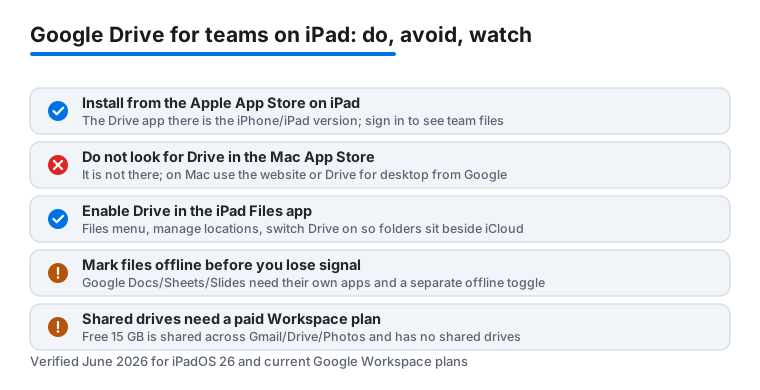
Practical tips we picked up
A few habits made Drive noticeably nicer to use as a group. First, agree on a folder structure before anyone uploads a thing. Drive is happy to become a junk drawer, and a shared naming convention saves hours later. Second, lean on shared drives rather than sharing individual folders from one person's My Drive, because shared drives keep ownership with the team and avoid the awkward moment when files vanish with a departing colleague. Remember that shared drives are a Workspace feature, so this advice assumes a paid plan.
Third, on the iPad, add your most-used shared folder to the Files app sidebar so it is one tap away. Fourth, get comfortable with the file activity panel, which shows who touched a file and when, so you are never guessing whether a teammate has seen your latest draft. Fifth, when you share a link outside the team, default to view-only with an expiry date and turn off downloading for anything sensitive. If your group also runs video calls and live documents, it pairs neatly with tools like Google Meet on a Mac for talking through a file while you both edit it, and we cover deeper editing habits in our guide to Google Docs tips for iOS users.
Limits and downsides to weigh
Drive is useful, but it is not flawless. The free tier gives you 15 GB shared across Gmail, Drive, and Photos, which a working team will burn through fast, so budget for a paid plan. Google Workspace Business Starter currently gives 30 GB of pooled storage per user, with higher tiers offering 2 TB and up, and storage pools across the organization rather than sitting in isolated buckets. Free consumer accounts do not get shared drives at all, so a team that needs proper shared ownership has to pay.
On the iPad, the Drive app does not edit Google formats itself, so you end up juggling Docs, Sheets, and Slides as separate apps, which is more app-switching than feels ideal. Large video uploads over cellular can be slow and battery-hungry, so save those for Wi-Fi. On the Mac, Drive for desktop competes with iCloud for Finder attention, and Spotlight does not index Drive files as reliably as it indexes iCloud, so local search can miss things.
Privacy-minded teams should note that Google scans file content to power search and to enforce its policies. That is what makes in-file search work, but it is worth understanding if you handle sensitive or regulated material, so read the terms for your plan rather than assume. Finally, if your whole company lives in Microsoft tools, Drive can feel like swimming upstream, since the smoothest experience assumes you are using Google formats.
Good alternatives if Drive is not your fit
If Drive does not click for your team, you have solid options. Dropbox remains a clean pure file-sync experience and plays nicely with the iPad Files app, though its built-in editing is thinner. Microsoft OneDrive is the obvious pick if your team already writes in Word and Excel, because the Office co-editing is tight and it ties into Teams. For Apple-first groups that mostly share within Apple's world, iCloud Drive with Pages and Numbers is free with your devices and feels native, but it is weaker for cross-platform work with Windows users.
For most mixed teams that want easy real-time co-editing and flexible sharing controls, Google Drive is still the one we suggest trying first, as long as you accept that the polished experience leans on Google formats and a paid Workspace plan. If you want the wider picture, browse our best productivity apps for iPad roundup, or explore the full Productivity hub for more team-friendly picks.
FAQ
Can I edit Google Docs offline on my iPad?
Yes, but you need the separate Google Docs app installed and you must turn on offline access inside that app, not just in Drive. Open the document in the Docs app, set it for offline use, and do this before you lose signal. Your edits then sync automatically when you reconnect.
Is there a Google Drive app in the Mac App Store?
No. The Google Drive app on Apple's App Store is the iPhone and iPad version. On a Mac you use the website at drive.google.com or install Google Drive for desktop from Google's own download page, which mounts your files in Finder. Keep your Mac on a supported macOS version, since Google drops support for older releases.
Is Google Drive free for a small team?
You can start free with 15 GB per account shared across Gmail, Drive, and Photos, which suits a tiny team briefly. But shared drives, which keep file ownership with the team, are a Google Workspace feature and are not in the free account. For real team ownership and more storage, a paid Workspace plan is worth the modest monthly cost.
Does Drive show up in the iPad Files app?
It does once you enable it. Open Files, tap the three-dot menu in the sidebar, manage your locations, and switch Drive on. Your folders then appear alongside iCloud so you can open and save files from any app without launching the Drive app first.
How do I share a folder with someone outside my team?
Open the folder, tap share, and add their email or create a link. You can set them to view only or allow editing, turn off downloading for sensitive files, and add an expiry date on the link. An expiry date is a smart move for short client work, since access closes on its own.