
Advanced Instagram Editing on iPhone and iPad: What Actually Made Our Posts Better
Everyone tells you to post more, but almost nobody shows you how to make a single photo look the way you pictured it in your head. We have spent a lot of evenings inside the Instagram app on an iPhone, and a few lazy afternoons on an iPad, pushing past the basic filters to see what the editor can really do. The short version is that the tools built right into the app are stronger than most people realize, and you rarely need a pile of extra apps to get a clean result. Here is the friendly walkthrough we wish someone had handed us, with the tweaks that genuinely changed how our feed looks.
Getting set up so editing actually feels good
Before any of the fun starts, do yourself one favor and make sure the Instagram app is current. Open the App Store, search Instagram, and update if there is a button waiting. The editing tools change quietly between versions, and in our testing the newer builds had smoother sliders and a couple of options older installs were missing. It takes thirty seconds and saves a lot of head scratching later.
If you have an iPad, you are no longer stuck with a stretched phone screen. Instagram finally shipped a proper native iPad app in the fall of 2025, redesigned again in spring 2026, so the editor now fills the larger display instead of sitting in a tiny column. The actual editing controls are the same set you get on iPhone, but seeing them bigger makes the fine adjustments much easier to judge. We do our quick edits on the phone and save the photos we care about for the iPad.
Next, think about where your photos start. The editor can only do so much with a dim, blurry shot, so we got in the habit of shooting in the iPhone Camera app first, where you have full resolution and proper focus, then bringing the image into Instagram to refine it. One last thing that quietly matters: go to Settings, find Instagram, tap Photos, and give it access to your full library rather than only selected photos. Otherwise you will be fighting the picker every time you want the shot you just took.
The editing tools that matter most
When you add a photo and tap through to the editing screen, you get a row of adjustments along the bottom that is easy to scroll past. Do not. These are where the real work happens, and a light hand here beats any heavy filter. After a lot of trial and error, these are the ones we reach for every single time:
- Brightness and Contrast: Tiny nudges only. A touch more brightness lifts a flat photo, and a little contrast gives it backbone. Push either too far and it looks fake fast.
- Structure: This is the quiet workhorse, and yes, it is still in the 2026 editor. It emphasizes texture and the lines in an image, and on food, fabric, or architecture it made our shots look noticeably crisper. Keep it modest. Past roughly a third of the slider it starts to look crunchy and the edges go harsh.
- Warmth: Slide it warmer for a cozy, golden hour feeling, or cooler to calm down an orange indoor light. This one rescued a lot of our kitchen photos shot under yellow bulbs.
- Shadows and Highlights: Lifting shadows recovers detail in dark corners, and pulling highlights down saves a bright sky from blowing out completely. These two together fix more photos than any filter.
There is also Lux, the little magic wand near the top of the edit screen. It is a one slider auto adjustment that balances contrast and detail in one move. We treat it as a starting point rather than a finish, nudging it up a bit and then doing the manual tweaks above.
The filters still have their place, but here is the trick we landed on: pick a filter, then tap it a second time to bring up its strength slider and dial it down to something like 50. At full strength filters scream for attention. At half power they add a mood while letting your actual photo breathe. That single habit changed our feed more than anything else.
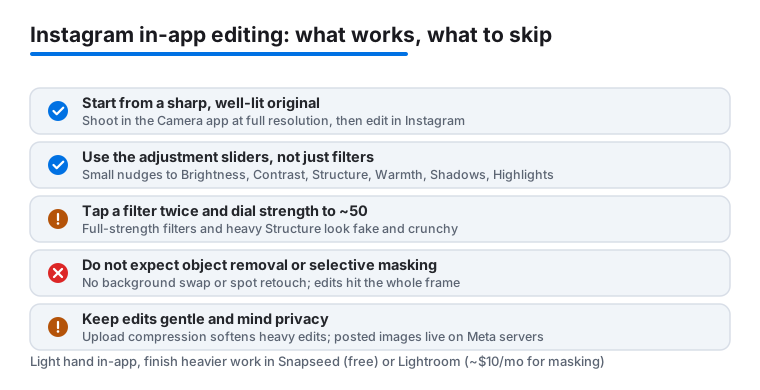
One caution before you get carried away. Every slider you push is editing a copy that will then be compressed again on upload, so restraint pays off twice over.
Practical tips we learned the slow way
A few habits separated our posts that looked thrown together from the ones we were proud of. The biggest one is consistency. We picked two or three adjustments and a single filter at reduced strength, then used roughly that same recipe across a batch of photos. Suddenly the grid looked like it belonged to one person with a point of view, which is what makes a profile feel pulled together.
For carousels, edit each photo to match the others rather than treating them as separate posts. We would finish one image, jot down the rough settings on paper or in Notes, and apply something close to the rest so swiping through felt smooth. Instagram does not let you copy edit settings between photos inside a single post, so a quick note of your numbers is the workaround.
When you want a tall photo to fit without cutting heads off, you have two honest options. Pinch to zoom out on the crop screen and Instagram will letterbox the image with small bars, or use a separate bordered canvas app first. Either keeps the whole frame visible. And always preview before you publish. We caught more than a few oversharpened or weirdly warm shots simply by pausing on the final screen for a second longer instead of mashing Share. If something looks off after you have moved on, you can delete the post and start over, but you cannot re edit a published photo in place, so the pause is worth it.
Where the built in editor runs out of road
We like the in app tools, but we want you to know their edges so you are not frustrated. The Instagram editor is built for quick, tasteful touch ups, not surgery. There is no real way to remove an object, swap a background, or do precise spot retouching inside the app. If a stranger wandered into your shot, Instagram will not help you erase them.
The filters and adjustments are also broad strokes. You cannot mask an effect onto just one part of the image, and you cannot fine tune individual colors the way a dedicated editor allows. Adjustments apply to the whole frame, full stop. We also confirmed what a lot of people suspect: uploading squeezes your photo through compression, so a heavily edited image can lose a little crispness once it posts. Our workaround was to keep edits gentle and start from the sharpest original we could, which kept that compression from showing.
One privacy note worth saying plainly. Instagram is owned by Meta, and the app collects a fair amount of data about what you do. The editing itself happens on your device, but the moment you post, that image and its metadata live on Meta's servers under their terms. None of this is a dealbreaker for everyday posting, but if you are chasing magazine grade retouching or you want to keep an image fully private, you will want to finish the work in a companion app and think twice before uploading.
Good companion apps when you need more
When the built in tools are not enough, you do not have to abandon Instagram. You just polish the photo elsewhere first and then bring the finished version in. A few editors pair well. Snapseed, which Google owns and keeps genuinely free with no subscription, gave us proper selective adjustments and a real healing tool for removing small distractions. VSCO has film inspired looks that feel more grown up than the stock filters, though its better presets and tools sit behind a yearly membership. Lightroom on mobile is the one we reached for when we wanted control over individual colors and tones; the basics are free, but selective masking, presets, and cloud sync need an Adobe Creative Cloud Photography plan that runs around ten dollars a month.
The flow that worked best for us was simple. Shoot, edit in one of these apps, save the result back to your library, then open Instagram and post with little or no extra filtering on top. Doing the heavy lifting outside the app and keeping Instagram's own edits gentle is what kept our posts looking clean after upload.
If you are leaning into video and Reels, that is a different craft with its own pacing and cuts. Meta now makes a separate free editing app called Edits for exactly that, and our walkthrough on iPhone TikTok editing hacks covers techniques that carry straight over. For the bigger picture of getting more out of the social apps on your phone, our roundup of the best social and dating apps for iPhone and the wider social and dating app hub are where we would point a friend next. And if profile photos are on your mind, the same careful editing habits apply when setting up a Tinder profile on iPhone.
FAQ
Can I edit a photo in Instagram without posting it right away?
Not as a saved edit on its own, but there is an easy trick. Start a new post, apply all your adjustments and filters, then tap the back arrow and choose to save as a draft. Your edited version waits in your drafts until you are ready to publish, which is exactly what we do when we want to prep a batch in advance.
Why does my photo look worse after I post it?
That is Instagram compressing the image on upload, and it shows up most on heavily edited or already soft photos. In our testing, starting from a sharp, well lit original and keeping the edits gentle made the compression almost invisible. Uploading on a strong connection rather than a weak one helped too.
Do I really need extra editing apps, or is Instagram enough?
For most everyday posts, the built in editor is enough once you learn the adjustment sliders rather than just slapping on a filter. We only reached for apps like Snapseed or Lightroom when we needed selective edits, object removal, or precise color control, none of which Instagram offers on its own. Snapseed is free, so trying it costs nothing.
Is editing better on iPhone or iPad?
The tools are the same, so it comes down to comfort. Since the native iPad app arrived in late 2025, the editing screen fills the bigger display, which makes fine adjustments like Structure and Shadows easier to judge. We found the iPhone fine for quick edits on the go and the iPad better for the shots we cared about. If you have both, edit the important photos on the iPad and post from whichever device is in your hand.