
Google Docs on iPhone and Mac: From First Document to Power User
Google Docs is one of those apps that feels obvious until you actually try to live in it on Apple hardware, and then the small differences between your iPhone and your Mac start to matter. We spent a few weeks writing in it across an iPhone 15, an iPad, and a MacBook, from thumb-typing a quick note in a coffee queue to a long editing session with two other people in the same file. The short version is that it is genuinely good for everyday writing and collaboration, a little fussier than you would hope in a couple of spots, and worth setting up properly before you depend on it. Here is what we learned, from the first install to the habits that turned us into faster users.
Getting Google Docs running on your iPhone and Mac
The setup differs in one important way, and knowing it upfront saves a lot of confusion. On iPhone and iPad, you install an actual app. Grab the free Google Docs app from the App Store, sign in with your Google account, and every document in your Drive shows up in seconds. It is a light download, it opens quickly even on older iPhones, and if your school or workplace uses Google Workspace the same login pulls in shared files without any extra steps. On iPad the same app picks up a couple of touches you do not get on the phone: you can handwrite with an Apple Pencil using Scribble and have it convert to typed text, which is handy for quick edits without reaching for the on-screen keyboard.
On Mac there is no native desktop app to download, and this trips up a lot of newcomers. Google has never shipped a standalone Docs program for macOS, and as of 2026 it still has not, so do not go hunting the App Store for one. Instead you open docs.google.com in Safari, Chrome, or any current browser, and that web version is the full, proper Google Docs with every menu and shortcut intact. In our testing the browser route on the Mac was easily the stronger experience for serious writing, because the desktop layout gives you the toolbar depth and keyboard shortcuts the phone app tucks away. One small thing that made the Mac feel more like an app: in Chrome you can use the Install option in the address bar to put Docs in its own window, then keep it in the Dock. It launches faster than digging through browser tabs and behaves like a normal program once it is there. Sign in once on each device and your recent documents follow you everywhere through Drive.
The features that actually earn their keep
Docs does plenty, but a handful of features did most of the real work for us day to day. These are the ones we kept coming back to across all three devices.
- Real time collaboration. Watch other people's cursors move and type in the same document live. This is still the single best reason most people pick Docs over anything else, and it works the same whether you are on the Mac in a browser or on the phone app.
- Offline editing. Mark a file as available offline and you can keep writing on a flight or in a dead zone, with everything syncing the moment you reconnect. Worth noting: on iPhone and iPad the app does offline editing natively, while on the Mac you have to switch on offline access in the browser first.
- Comments and suggesting mode. Switch to Suggesting from the pencil menu near the top right and your edits show as proposals the author can accept or reject, which is good for feedback without trampling someone's draft.
- Voice typing. This one is Mac-only in practice. Open Tools then Voice typing in Chrome, Edge, or Safari on the desktop and spoken words turn into clean text faster than you expect for a first draft. It does not exist in the iPhone or iPad app, and it does not run in Firefox, so do not waste time looking for it on the phone.
- Version history. File then Version history lets you roll back to any earlier save. This quietly rescued us once after a well meaning edit flattened a whole section.
- Smart Compose and spelling. The grey inline suggestions finish common phrases as you type, and you accept one by pressing Tab. The grammar and spelling checks catch the obvious stumbles before anyone else sees them.
A word on the AI features, because Google markets them heavily and the naming is confusing. The Gemini writing help inside Docs, the panel that drafts text or rewrites a selection for you, is part of paid Google Workspace plans rather than a free extra, so a personal Gmail account will not always see it. In 2026 Google also added Docs Live, a Gemini feature that lets you build and reshape a document by talking to it conversationally. That is a separate thing from the old Voice typing tool, which simply transcribes your words literally. If your work already lives in the Google world, Docs pairs naturally with the rest of the suite, like Google Sheets on iOS for the numbers that sit alongside your writing.
Practical tips from our testing
A few habits made the whole thing noticeably smoother. First, split the work by device on purpose. Do your heavy lifting, like restructuring sections, building tables, or fiddling with formatting, on the Mac in a browser, and save the iPhone for quick captures and last minute fixes. The phone is good for jotting an idea before it escapes and frustrating for layout, so do not fight it. If you carry an iPad with a keyboard, it sits comfortably in the middle and can handle a fair amount of real editing, especially with Scribble for small touch-ups.
Second, learn three keyboard shortcuts on the Mac and you will move through edits far faster than hunting through menus: Command B for bold, Command Z for undo, and Command K to drop in a link. Add Command Shift C if you want a live word count while you write. Third, before any trip or important meeting, open the documents you will need and turn on offline access so a shaky cafe network cannot strand you mid sentence. On the Mac that lives in the Docs home screen settings inside the browser; on the phone you tap the three dots next to a file and choose Make available offline. 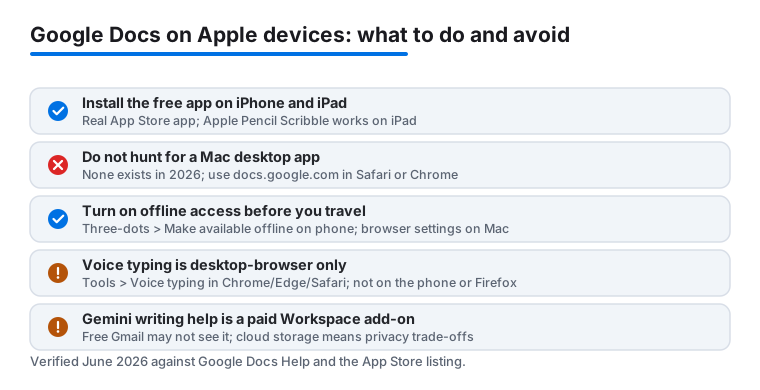
The limits and downsides worth knowing
It is not all smooth, and a little honesty here will save you some teeth grinding. The clearest gap is that the Mac has no offline desktop app of its own. Everything runs through the browser, so a flaky connection genuinely slows you down unless you have set up offline access for those specific files in advance. We got caught out by this exactly once and never again. There is a separate Google Drive for desktop tool that syncs your files to the Mac, but it still hands you off to the browser to actually edit, so it does not change the picture much.
The iPhone app also hides the more advanced tools. Detailed formatting, add-ons, the Gemini writing panel, and some of the finer table and image controls are awkward or simply missing on the phone, so anything beyond straightforward writing pulls you back to the Mac. Long documents with lots of images felt a touch sluggish on the phone too, with the occasional pause while scrolling through something big. Formatting can drift when you import a heavily styled Microsoft Word file, so an important .docx sometimes needs a cleanup pass after it lands. And there is a privacy point worth being clear-eyed about: your documents live on Google's servers, and the free service is tied to the wider Google account, so if that matters for sensitive work you should check your organisation's rules before putting confidential material in there. Treat Docs as a strong collaborative writing tool rather than a heavyweight desktop publisher and you will rarely be disappointed.
Good alternatives if Docs is not the right fit
Docs is one of several solid choices, and the right pick really depends on what the rest of your work already uses. If you are paying for Microsoft 365, Word is the obvious rival with deeper formatting and a true native app on both iPhone and Mac, and our look at the hidden features in the iPhone Word app is a useful companion if you lean that way. Apple's own Pages is the natural choice for anyone settled in the Apple ecosystem, with tidy templates and genuinely good touch editing on iPhone and iPad, all for free, and it works offline on the Mac as a real installed app rather than a browser tab. Notion is worth a look if you want your documents living inside a wider workspace of notes and databases rather than as standalone files, though it asks more of you to set up.
For most people the honest answer is to stay with Docs for anything collaborative, where live co-editing is hard to beat, and reach for Pages or Word when a single document needs serious design polish or you want to work fully offline on the Mac without any setup. To see how these tools stack up against the wider field, browse our best productivity apps for iPhone guide and the full Productivity hub.
FAQ
Is there a Google Docs app for Mac, or do I use a browser?
There is no dedicated Mac app, and Google has not released one as of 2026. On the Mac you open docs.google.com in Safari or Chrome, and that web version is the complete Google Docs with every menu and shortcut. In our testing it was the better place for real writing than the phone app. If you want it to feel more like an app, use Chrome's Install option in the address bar to put it in its own window and keep it in the Dock.
Can I edit Google Docs offline on my iPhone or Mac?
Yes, but you have to switch it on first. On iPhone and iPad, open a document or tap the three dots next to it and choose Make available offline. On the Mac, enable offline access in the Docs home screen settings inside your browser. Once that is done you can keep writing on a flight or in a dead zone, and your changes sync the moment you reconnect. Set this up before you travel rather than after, because you cannot turn it on once you have lost signal.
Will my documents stay in sync between iPhone and Mac?
They will, as long as you sign in with the same Google account on both. Your files and your recent documents list follow you through Drive. In our tests we started writing on the Mac and picked it up on the iPhone without re-entering anything or losing a word, which is the whole point of working this way. The one thing to watch is signing in under the wrong account if you keep a personal and a work login side by side.
Does Google Docs open Microsoft Word files cleanly?
Mostly, but not perfectly. A simple .docx opens fine and edits without drama. A heavily styled Word file, with complex tables or precise layout, can shift around a little when it imports, so an important document sometimes needs a quick cleanup pass. For ongoing back and forth with Word users, keeping the file in its original format and editing in the Word app is often smoother than converting it.