
Creating Engaging Social Media Content With Canva on iPad and iPhone
I spent a full week building a content calendar for a small bakery using nothing but Canva on an iPad Pro and an iPhone 15, and the honest takeaway is that this app was clearly built for touch. Dragging a photo into place with your finger, pinching to resize a logo, and tapping through brand colors feels closer to playing than working. Below is what stood out in our testing, the features that actually saved time, and the spots where I wished I had a laptop instead. To be clear on what you are installing: Canva is one universal app on the App Store that runs on iPhone, iPad, and Apple silicon Macs. There is no separate iPad version to hunt for, and your account carries the same designs across all three.
Getting Canva running and signed in
Canva is a free download from the App Store, and it installs in seconds on any modern iPad or iPhone. The listing is now called Canva: AI Photo and Video Editor, which is a mouthful, but it is the same app most people just call Canva. The first hurdle is the account. You can sign up with Apple, Google, or an email, and I would push you toward Sign in with Apple here, because it keeps your inbox clean and syncs instantly across both devices. Within a minute of signing in on the iPad, every design I touched showed up on the iPhone too, which matters when you want to start a post on the couch and finish it in line for coffee.
One thing worth knowing up front: the app nudges you toward Canva Pro almost immediately with a free trial banner. You do not need it to make good social posts. I built most of the week on the free tier and only bumped into the paywall when I wanted the Background Remover and a few premium stock photos. If you are just testing the waters, ignore the upgrade prompts and start designing. A small but real privacy note: an account is required to use the app at all, so there is no anonymous mode. Canva stores your designs and uploaded photos on its servers so they can sync, which is convenient but does mean your client artwork lives in someone else's cloud. If that matters for a particular client, keep the sensitive stuff out and export to your own storage.
The features that actually matter for social posts
What makes Canva worth your time is not the sheer number of templates, it is how fast you can go from a blank square to something you are proud to post. A few things earned their keep in our testing:
- Ready sized templates. Tap the plus button, pick Instagram Post, Story, or a video format, and the canvas is already the right dimensions. No guessing at pixels.
- Brand Kit. Drop in your logo, two or three colors, and your fonts once, then every new design pulls from them. This alone cut my design time roughly in half by day three. On the free plan you get one Brand Kit, which is plenty for a single business. If you juggle several clients, multiple kits are a Pro thing now.
- Magic Resize. Build a square post, then turn it into a Story and a Pinterest pin without rebuilding from scratch. It sits behind Pro, and it is the one feature I would actually pay for if I posted to more than one platform a day.
- Background Remover. One tap to cut a product out of its background. It is genuinely good, and it is a Pro feature. There is no free workaround inside the app, so factor that into your decision.
- Text effects and the photo editor. Curved text, shadows, and a quick photo blur live right in the toolbar, so you rarely need a second app.
The newer AI tools, grouped under what Canva calls Magic Studio, do run on the phone and tablet, not just the desktop. Magic Eraser wipes out a stray sign or passerby and fills the gap, Magic Expand stretches a photo to fit a taller Story frame, and Dream Lab generates images from a text prompt. They lean on a monthly credit allowance on the free plan, so you will run out if you lean on them heavily. Treat them as occasional helpers rather than your whole workflow. The Apple Pencil is a quiet bonus on iPad too. Precise nudging of a caption box or sketching a rough highlight is far easier with the Pencil than a fingertip, especially on a small Story layout.
Practical tips from a week of daily posting
A few habits made the whole process smoother, and I wish someone had told me on day one. First, set up your Brand Kit before you make a single post. It feels like a chore, but it is the difference between a feed that looks intentional and one that looks like a grab bag. Second, lean on the folders. I made one folder per client and one for finished posts, and finding last Tuesday's graphic took two taps instead of endless scrolling.
Third, use the iPhone for quick edits and the iPad for real building. The phone is fine for swapping a caption or fixing a typo on the go, but laying out a carousel on the larger iPad screen is far less fiddly. Fourth, filter the elements panel to Free before you start dropping in graphics, so you do not fall in love with something that turns out to be locked. 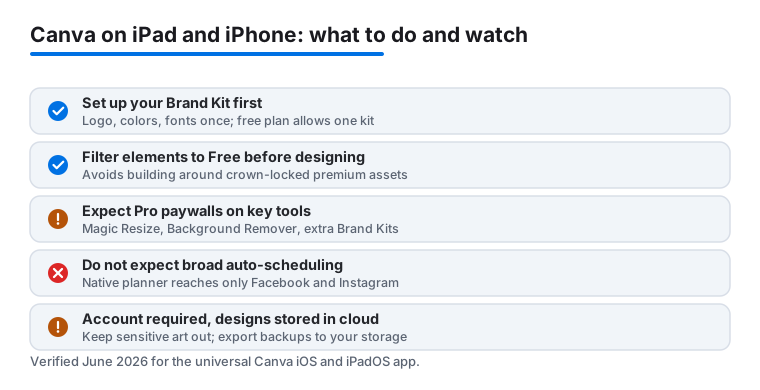
One word on scheduling, since people ask. Canva's Content Planner can queue posts ahead of time, and it reaches more platforms than people expect: you can schedule directly to Facebook Pages and Groups, Instagram business accounts, X, LinkedIn profiles and pages, Pinterest, and TikTok. That covers most of where a small business actually posts, so for a lot of people it really can act as a one stop scheduler. Two honest caveats: this scheduling lives behind Canva Pro, and connections can occasionally need reauthorizing when a network changes its rules, so I still kept a separate tool around as a backup for the rare hiccup.
Where Canva slowed me down
No app is perfect, and a week of daily use surfaced some real friction. The biggest one is the constant gentle pressure to upgrade. Premium elements have a little crown icon, and it is easy to spend ten minutes on a design only to realize half of it is locked behind Pro. Filtering for free elements first saved a lot of that frustration, but the nudges never fully stop.
Performance is mostly fine, but very busy designs with lots of layers and effects can stutter on older hardware. On the iPhone especially, a heavy multi page document took a beat to scroll, and a long Dream Lab generation occasionally left the app spinning for a while. The mobile editor also hides a few advanced controls that the larger screen keeps in plain sight, so if you came from the desktop version you will go hunting through menus now and then. And while some editing works offline, it is limited, so a shaky connection at a cafe meant premium assets and AI tools simply would not load until I had real signal again. Budget honestly too: Pro runs about fifteen dollars a month billed monthly, or roughly a hundred and twenty a year if you pay annually. The free tier is real and useful, but the features most pros want, Magic Resize, the Background Remover, multiple Brand Kits, sit on the paid side of the line.
Good alternatives worth a look
Canva is my default for social graphics, but it is not the only tool that belongs on your home screen. If your posts lean heavily on photography and you want filmic color grading rather than templates, the approach in our iPad VSCO techniques guide is a strong companion for editing the images before they ever land in Canva. For video first content like Reels and TikToks, a dedicated editor gives you finer control over cuts and transitions, and our guide to editing videos on iMovie for iPad walks through that nicely.
For the full range of design and creative tools on Apple devices, browse our roundup of the best photo and video apps for iPad, or explore everything in the Photo and Video category. The honest answer is that most creators end up using two or three apps together, with Canva as the hub where the final post comes together.
FAQ
Is Canva really free to use on iPad and iPhone?
Yes, and the free tier is genuinely useful. I made a full week of social posts without paying. You only hit limits with premium templates, certain stock photos, the Background Remover, Magic Resize, and extra Brand Kits, which all live behind Canva Pro at about fifteen dollars a month.
Do my designs sync between my iPad and iPhone automatically?
They do, as long as you are signed into the same account. In our testing a design started on the iPad appeared on the iPhone within seconds, which makes it easy to start on the big screen and finish on the small one. The same account also opens on an Apple silicon Mac if you have one.
Can I post straight from Canva to Instagram or TikTok?
Yes. Canva's Content Planner schedules directly to Facebook Pages and Groups, Instagram business accounts, X, LinkedIn, Pinterest, and TikTok, so most major networks are part of that direct flow. The scheduling sits behind Canva Pro, and I still saved a copy to Photos first as a backup in case a connection needed reauthorizing.
Is the Apple Pencil worth using with Canva?
For precise work, yes. Nudging a text box, drawing a quick highlight, or fine tuning a small Story layout is noticeably easier with the Pencil than a fingertip. It is a nice bonus rather than a requirement, and everything still works fine with touch alone.